Showing posts with label inspiration. Show all posts

Thursday, 25 September 2014

A teacher's guide to Facebook in the classroom


Since its launch ten years ago, Facebook’s potential for use in the classroom has become undeniable. But how can teachers keep their private life private, while still making use of Facebook as a collaborative learning tool? 

Many people will rightly advise you that to expose your private life to students is to risk public humiliation. It could happen to anyone, anytime. A photo is put up on Facebook, it’s tagged with your name, the privacy settings aren’t as strict as they could be and there you are: on a lively night out, in provocative fancy dress, a bit worse for drink, and for all the world to see.

The teaching profession, in particular, is in the public eye and many teachers are finding that Facebook – and their pupils – are revealing much more about them than they’d expected.

But Facebook has the potential to create an open and supportive environment for the pupils, and allow you to get to know them in a whole different light, and to revolutionise the way homework is planned, completed and reported on.

It can also be a great tool for teachers’ professional development, providing a safe space for teachers to share their expertise and professional practice within and beyond the walls of the classroom.

But how can you make the most of Facebook in your classroom without falling into its traps? Our guide below will take you through the process, and hopefully give you a few exciting ideas to try in your own school.

Creating a profile
The first thing to do is create a new Facebook profile that you only use for school. Only include the information you want your pupils and colleagues to see. Set all your security levels to high.

Next, set up a fan page for your school. Fan pages allow you to distribute announcements, blog posts, events, assignments and more right into the live streams or 'News Feeds' of those that ‘like’ your page. This is better than using a personal profile because there is no need for parents or students to be your friends to get the updates, and it can really be used to develop an online community around your class or school.

Setting up groups and pages
For most teachers, pages and groups will be the two key tools of your communication hub.

A page is public, which means that anyone can view it. Anyone can like a page on Facebook, and students who do will see updates in their News Feed.
Groups enable you to communicate to a smaller audience and allow you to limit membership to only those you approve. Using a page or a group is a great way to use social media with your students without blurring the line between your professional and personal lives.

Facebook groups can be quickly created, with their access easily limited only to a form or year group. Pupils can be invited by email. Files can be uploaded by the group administrator, who can also begin debates using an inbuilt polling feature. Pupils can be directed to the group where they can easily access a set of resources for a specific subject, share links to resources and discuss revision assignments. 

Plus, when a teacher adds a new file, question or post, they are able to see how many group members have seen and read the item.

How to introduce Facebook to your school
  • Get leaders on board – get your headteacher, senior leaders and governors to understand the benefits for learning, engagement and communication.
  • Talk to ICT – identify and unblock Facebook access restrictions for teachers first so you can test ideas and projects with colleagues. Start simple – experiment with the use of a Facebook page or group where you can test the tools and technology.
  • Privacy – if you are working directly with students, adjust your own privacy and security settings on Facebook and get them to do the same.
  • Start outside the classroom – consider starting to use Facebook in an out of school hours learning activity like a sports team or drama group.
  • Test ideas – use fellow staff members and pupils to explore what works and doesn’t work to develop and test your ideas across subjects to extend the reach of the initial project. Informally test and evaluate its impact.


EXCITING IDEAS!
  • Use polling tools to set up a series of questions or debates for a group of pupils.
  • Set up a Facebook page for each project you do with your students. You can post news, photos, videos, comments, competitions and information relevant to the project. The page’s Timeline will keep a record of it all, allowing you and your students to track back and access older content.
  • Just in time for remembrance day… why not have your students create a comprehensive and interactive history of WW1, or indeed any other time period? Split your class into groups, have each group create a Facebook page, and then ask them to post relevant images, information, articles and other media to the page’s Timeline, pinned to the dates these major events occurred.
  • Ask outside experts to chime in on your Facebook page – easier, quicker and cheaper than booking a school visit!
  • Use Facebook for foreign language learning and partner your students up with pupils who speak different languages, from Spanish to Japanese. It’s easier than writing and sending letters and allows students to engage with their pen pals frequently and instantaneously outside of the classroom.
  • Set up a Facebook group for your students' parents. The group acts as a central hub for information – so using the example of a school trip, you can use it to share relevant staff contact details, itineraries and maps. You can even use it to keep parents updated during the trip itself, for example by posting photos.
  • Set up an event on Facebook to ensure your students never miss an upcoming exam or essay deadline. Invite all the relevant students to that event – they’ll receive a notification of the invitation and then when they accept or join the event, they’ll receive alerts when you or other members post information or update the event details. 
  • Not really a Facebook tool, but inspired by it... Fakebook allows you to create a fake Facebook account for a book/film character or historical figure (it doesn't create an actual Facebook account). This is a much more inventive alternative to writing a standard biographical piece. There are lots of other tools/templates like Fakebook if it doesn't work for your particular needs. Students could even create their own in powerpoints and word documents.


More advice and an even greater range of exciting ideas and inspiration can be found in our article, Facebook in the classroom, available to purchase from our website.

Wednesday, 2 July 2014

Less is more? Teaching students to summarise


Summarising a piece of text is a skill that students will need time and time again throughout their school life and beyond. Help them develop this skill with these two simple activities to teach summarising skills to pupils of any age group.


Activity 1. 'In a nutshell...'

'In a nutshell...' requires students to read a story or piece of text of your choice and then retell it in 25 words. Once students have reduced the text to 25 words, they then reduce the summary to a three word headline.

The activity provides an opportunity for students to concentrate on the main ideas of a text. It demonstrates to pupils that recording small details can prompt them to remember a good deal of information. Pupils will also see the need to ignore unimportant information, and evaluate whether they have captured the gist of the text.

You can download this task's worksheet for free here.


Activity 2. Word Splash!

This activity requires you to select ten key words from the text you'd like your students to summarise. Give students a copy of the text, write the ten words up on the board and tell the pupils they are going to write a paragraph summarising the story. They must use all the words on the board.

A limit of words can be given, a paragraph of no more than 50 words to summarise the text, for example.

The Wordsplash activity is a great way to differentiate for students who might struggle with 'In a nutshell...'. It's not as challenging, as students have more words to summarise the story with and the support of the key words on the board, but it still helps focus students on capturing the main ideas of the text.


If you are a subscriber to our magazine, you'll recognise these activities from one of our recent project plans. They were created by the fabulous Jane Jones, who designs all of our spectacular cross curricular projects. Don't miss out - subscribe to Creative Teaching and Learning today!

Friday, 20 June 2014

Can you picture the music?


Philip Davis uses images and sound to make sure the students he works with can never say they haven't got any ideas. 

Here, he recounts some of the exciting projects he's undertaken with schools in the last couple of years, and shares a practical activity for you to try with your own students!

The ‘Whole New World’ project in Netherfield school, Nottingham, aimed to raise achievement and motivation in communication and literacy skills across the school. 


Every class, from Reception to Year Six, formed part of an imaginary land – oceans, caves, grassland, forests, rivers, lakes and mountains. I used sounds and images to immerse the pupils into their worlds – for example, a bubble machine and the sounds of waves and water were used with Reception.

Once the pupils had decided what their part of the land was like, they all developed a character. Their characters then became part of stories, and the students used their own images and others with sounds on the map templates. 

A Sherwood oak sculpture at
Netherfield School
As well as developing stories, we made books and models of the characters – Year Six even gave them Latin names. Each year group voted one character to represent their part of the land. These were then made into amazing sculptures using Sherwood oak. They are now in the playground as inspiration for more storytelling and poetry. Structures representing the areas of the land were also built around the playground and the pupils took an active role in doing this. 

Another interesting project I have undertaken with many schools is called ‘Element’, a week-long project based on the four elements – fire, water, earth and air.

The starting point of the whole week is poetry. I put together a collection of images and sounds to inspire ideas. Each pupil writes a poem based on what they experience from those images and sounds. I then collect all the poems and combine individual lines to create four songs – one for each element. Each class learns their song and the enthusiasm shown is wonderful when they realise it is their words being used with the music.

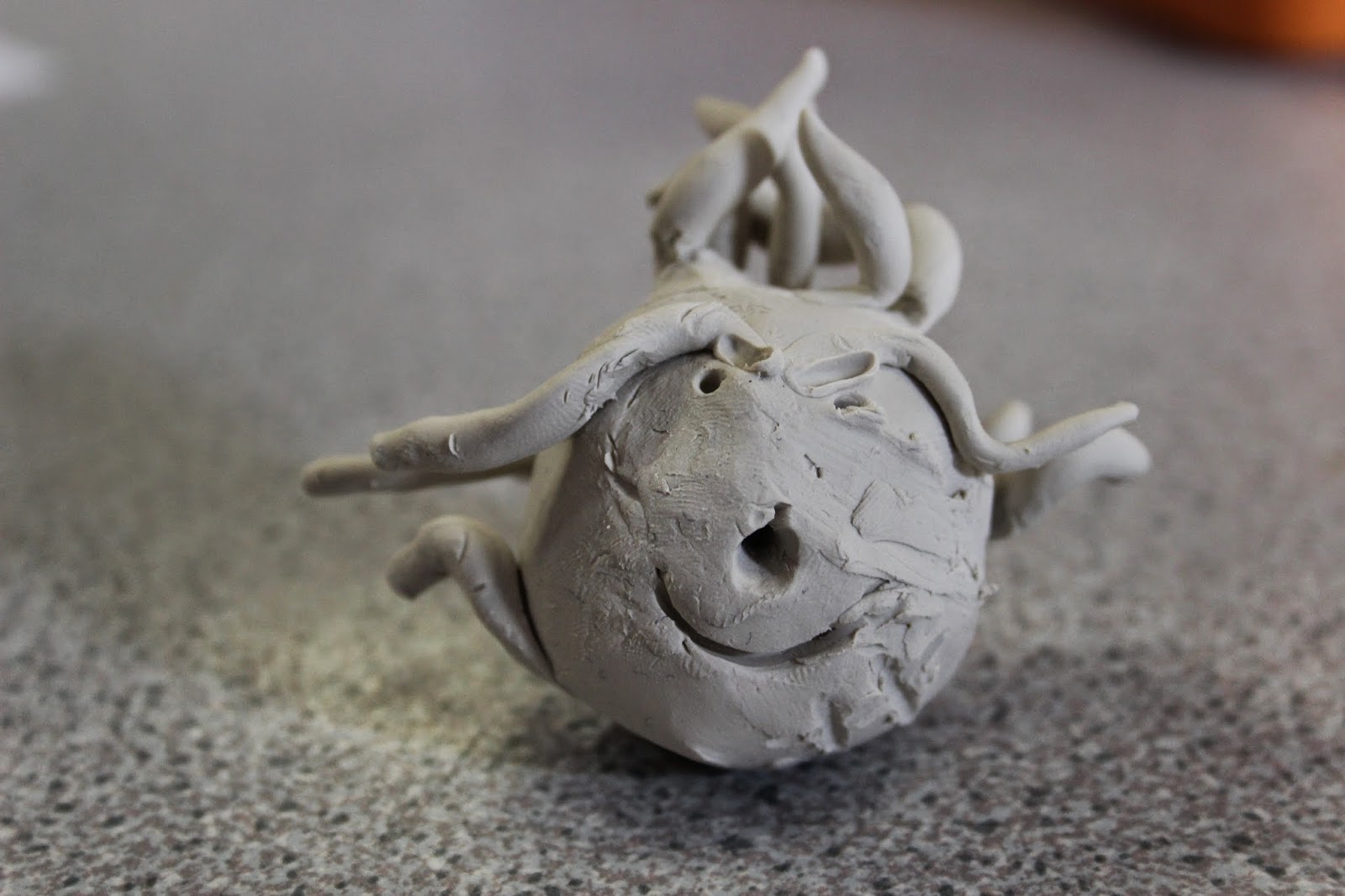
As part of the ongoing development of the methodology used in the Elements project, I have also designed sounds to inspire characters that represent the elements. I do this through something I call 'Sonic Moulding' – creating a three-dimensional model from sound. The diversity and imagination shown in this activity is stunning. Last year, I ran the project in four schools and not one model has been the same. It is an activity that both adults and children love.

The product of 'Sonic Moulding'
These models are then used as the basis for character descriptions. The engagement of the pupils is fantastic – they just love talking about their models, even giving them voices. Some pupils have even gone on to make short, stop-frame animation films with their models. There are so many possibilities.

The Elements project continues with sonic painting, drawing from sounds, poetry performance, expressive dance, song and sound design. Everything is put together for a special performance for parents and other invited guests. The pupils are encouraged to take an active role in all the preparations of this show. 

One parent said to me about his son in Year 4: ‘He usually doesn’t talk about school but this week he hasn’t stopped. He’s loved every minute.’

Try something like this yourself!

You will need:
  • An image of a door (either on screen, or printed - make sure if you print it to have enough to distribute among the pupils)
  • Two sounds of your choice
  • Paper/pens

Put the image of the door on the screen.

Tell the pupils that the first sound they will hear represents a setting behind the door. Ask the pupils (you can do this with any age – even adults love it!) to write down or draw what settings they ‘see’ behind the door. As sound affects us all differently, it is very possible that each individual will have many, unconnected ideas – this is fine and should be encouraged. 

One Year 1 class  used the sounds
to imagine a scary, cold cave
After the sound has been played, give the pupils a few minutes to gather their thoughts and then share the ideas. Get them to write down everything that comes into their heads and encourage as much detail as possible. Rather than saying ‘there is a forest behind the door’, ensure that the atmosphere, colours and all the small details are described. 

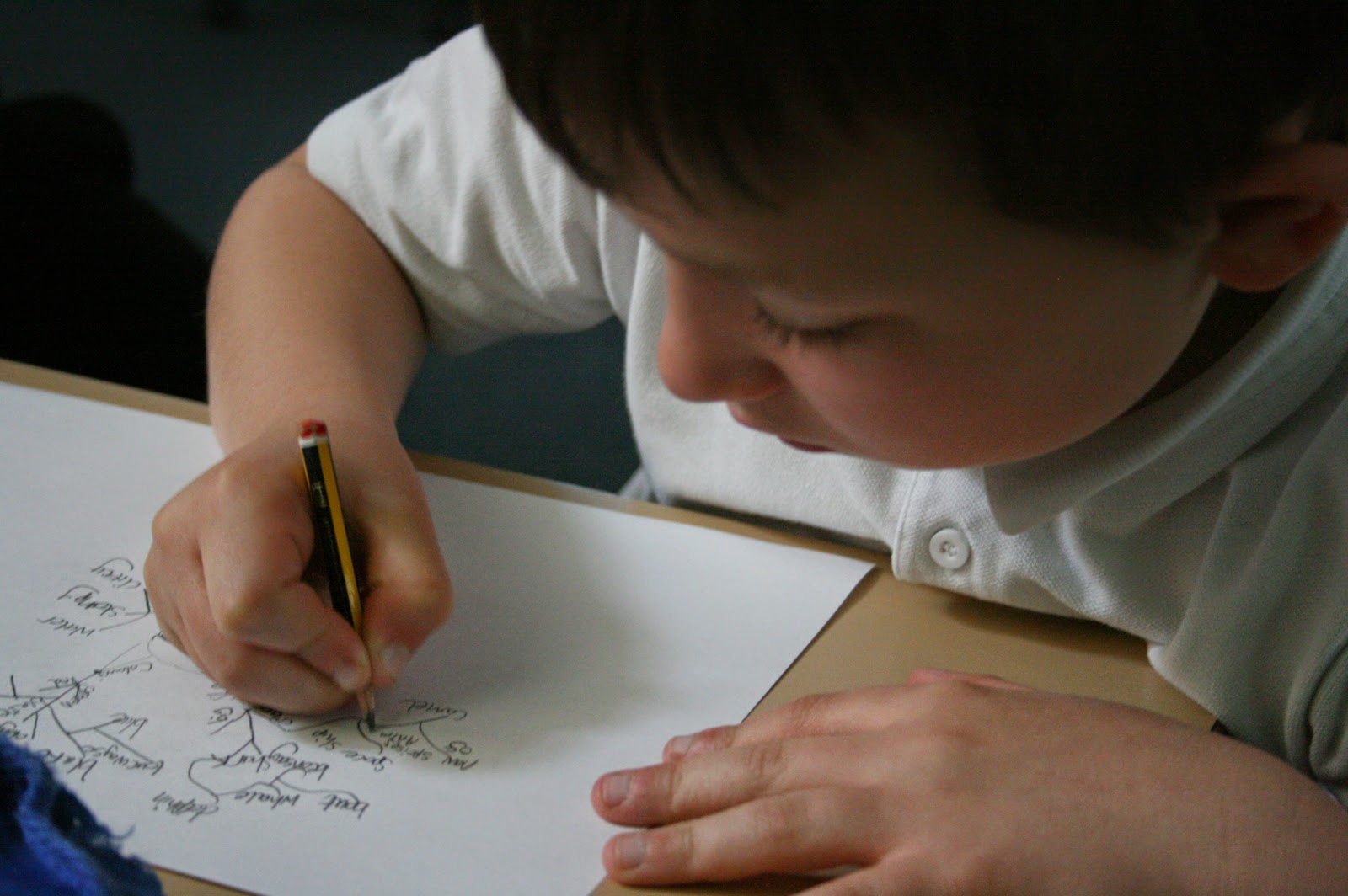
Students can jot down their ideas on mindmaps like the one to the right or post-it notes.

The second sound represents a character. It is important to mention here that you do not want your students to come up with a character from fiction, but an idea of their own. Students can base them on characters they know from fiction, but do encourage them to be original. It works.

Now your students have both a setting and a character - let the creative works commence!

This blog post has been adapted from the article Philip wrote for Creative Teaching and Learning magazine. You can purchase the fab full article here.

Find out more information about Philip and his work here.

Watch the video below to see some of the amazing creative responses generated during the Elements project.

Thursday, 19 June 2014

Top 5 websites for teaching about conflict and genocide


(Image: bbc.co.uk)
August 2014 will mark the centenary of the start of World War I - the bloodiest human conflict the world had ever known. The theme of conflict and by extension, genocide, is on many minds. Have we learnt anything in the last 100 years?

Apparently not. Wars and genocides killed nearly 170 million people during the twentieth century,  and many more since.This makes for a sensitive subject, and one that poses many challenges when working out how to broach the subject in the classroom.

How do we make learning about genocide lively and engaging for students of all ages and abilities? How do we do this and still retain the respect such a subject deserves? And the big one – how do we make such horrific events relevant and meaningful to our students? After all, the death toll is merely that – a figure – and it can be very easy to detach ourselves from dry facts and long lists of statistics.

We've picked out what we think are the best 5 websites for teaching about conflict and genocide. A key theme threading its way through each and every one of them is that conflict and genocide is not at all a thing of the past. It’s happening now, it’s relevant to all of us, and there are things that we, as teachers, students and ordinary human beings, can do. 

It’s a lovely approach to take when teaching about war and conflict, and as well as a range of teaching tools, there are plenty of practical ideas on these sites for awareness-raising activities and initiatives that students might be motivated to set up in their own schools.

1. British Red Cross
The teaching section of this site is very philosophically inclined – most of the resources are aiming to develop students’ questioning and critical thinking skills.

You’ll find lesson plans, assembly kits and a whole array of multimedia resources. Some of it is less relevant to conflict and genocide, but there are some fantastic lesson plans for a range of age groups, covering subjects such as:

There are some very poignant and compelling images here – great discussion starters.

Also worth a look is the 'Quick activities' section, which features a variety of unusual lesson starters and activities, including charming your way through a hostile checkpoint in a troubled country, exploring daily life in a war zone, and an interesting discussion on acting with humanity  and morality during war.

2. Children of Conflict
An offshoot of the BBC’s World Service, Children of Conflict is an awareness-raising initiative, and as such, aims to shock. It focuses on the stories of children who have lived and are still living through wars and conflict - in particular, child soldiers, lost children, wounded children, children running households (generally orphans with younger siblings) and child workers.

The information in each of the main sections is direct and simply put. A child with only moderate literacy skills would have no problem navigating the site and reading the information. You’ll also find quotes and stories from children all over the world here, all in the child’s own words, translated directly and shocking in their simplicity.

The majority of quotes are from school-age children between the ages of ten and 17, which should make them all the more thought-provoking and relevant to our students. It might encourage them to ask, ‘What would I do in their shoes? How would I feel? How could I cope?’

3. Hiroshima Remembered
A fantastic resource for any project or research assignment on the atomic bombings of Hiroshima and Nagasaki, this website tells the story right from the testing of the bombs all the way through to the Japanese surrender and beyond

There’s a substantial number of photographs, a couple of maps and a few short video clips of the explosion and its aftermath. You'll also find a selection of brief biographies of those behind the design, testing and dropping of the bombs – very useful, as the articles themselves don’t waste much time explaining who’s who.

If your students are investigating whether the bombings can be justified, then the 'Historical Documents' section is especially worth pointing them towards. In it, you’ll find a compilation of documents, including lead nuclear researcher Leo Svilard's petition to the president arguing against using his newly developed atomic weapon on innocent civilians, the White House press release on the Hiroshima bombings, and the personal reflections of President Harry Truman on giving the order to drop the bombs. A lot of interesting and thought-provoking resources here – the highlight of the site as far as we're concerned.

4. A Teacher's Guide to the Holocaust
A must visit for teachers of all key stages – and students too.

(Image: thephilanews.com)
Aside from pages and pages of facts, figures, eyewitness accounts, photographs and lesson plans, you'll also find a massive compilation of multimedia resources such as photographs, video clips, music, maps, bibliographies and more.

Highlights include hundreds of primary source documents related to the Holocaust, and a collection of virtual reality movies. These virtual reality movies – essentially interactive panoramas – will take you and your class on a virtual tour around concentration camps, Nazi ghettoes and Holocaust war memorials. Especially poignant are the images from Majdanek camp and killing centre, which lead you through the final journey of the Nazi’s many gassing victims – beginning with the undressing room and ending in the crematorium. 

For many students, the Holocaust is a difficult thing to comprehend – these panoramas are an effective way to make it real, and might also stimulate some interesting responses through creative writing, drama or music.

5. Rwandan Stories
A striking site, Rwandan Stories traces the history of the Rwandan Genocide right from its origins, all the way through to the nation’s recent and rocky recovery.

The articles are clearly organised and categorised, and the information included is extensive.
There are some stunning photographs here, and a large number of fantastic video clips, the majority of which are around two to three minutes long, making them perfect for a classroom setting.

Highlights include ‘My friend the killer’, the firsthand account of a young woman who became friends with one of the interahamwe militia, and ‘A good man’, in which a young Rwandan man who lost over fifty family members during the genocide, recounts his grandfather’s murder.

The site is full of stories like these, and not only from journalists, relief workers and victims of the genocide either. The most interesting and unique aspect of this site is that it includes stories from those who participated in the genocide too – the killers. 

Their tales of brutal murder are chilling, but reading through, you realise that they are people too. It’s a sobering thought, and has such potential for deep exploration, especially with older students, providing a fantastic starting point for all sorts of philosophical enquiries into morality, prejudice and dehumanisation.


The killers speak
(Image: rwandanstories.org)

Wednesday, 7 May 2014

A crash course in writing good driving questions


One of the most difficult things about planning a project-based learning unit is writing the driving question (DQ).

And no wonder! According to the Innovation Unit’s guide to project-based learning, a good driving question is a question that:
  • people ask in the ‘real world’
  • has no single, easy answer, and stretches students’ intellectual muscles
  • ignites students’ imaginations.
The question should also address content from the curriculum and allow for the development of 21st century skills. Students also have to be able to answer it thoroughly with the time and resources available.

Add all that to the fact that the whole project hinges on a good driving question, and you can understand why DQs are not only very important, but very challenging to create. There’s a lot of pressure to get it right!

But let’s start with the basics. First, a reminder of what a driving question is:

A driving question is the ‘big’ question that provides the stimulus for a project. 

According to the Buck Institute of Education (BIE), there are 2 basic types of driving question:

     1) A DQ that specifies a product to be created, a task to be done, or a                     problem to be solved.
     2) A DQ that focuses on a philosophical or debatable issue, or an intriguing           topic.


Where can we find inspiration?
Creating a question that fulfils the criteria listed at the outset and has enough power to drive the project as far as you want it to go is not easy. It’ll take time, trial and error, and lots of discussion with your colleagues.

Some of the best DQs come from the students themselves. Do this by introducing your class to the topic you’d like to be the focus of your project – it should be presented in a relevant, thought-provoking manner, perhaps through a current news article.

For example, in recent news, we’re heard that doctors are rapidly running out of medicines to treat infections, as certain strains of bacteria are growing increasingly resistant to antibiotics. This could mean that in the very near future, a minor scratch or infection after a routine operation could kill. Think of the implications of this! By discussing the issue and doing some relevant research, students can come up a question that will guide a project along this theme. For instance, ‘How might running out of antibiotics affect our daily lives here in the UK?’ or ‘How did past civilisations cope without medicines for infections and other common ailments?’

Driving questions that are specific to your local area can also be very effective. Recently, one science teacher at a school in the San Francisco Bay Area teamed up with art and government teachers to implement a project on the devastating Deepwater Horizon oil spill of 2010. They chose the driving question: ‘Who is to blame for the oil spill?’ Because the students lived in the area of the spill, and could remember it happening, there was an immediacy and a connection to the people most affected by the disaster that helped engage them in the topic.

And there can be more than one driving question! As the project develops, you may find that other questions need to be asked and answered before the final, overarching question can be explored to its fullest extent, or for the desired curriculum content to be fully covered.

For example, in the oil spill project cited above, the teachers realised their students needed a greater understanding of the impact of the disaster and also the clean up efforts afterwards before they could take part in the final exhibition - a simulated town meeting in which students played the various roles of residents and other stakeholders deciding how to deal with the oil spill. Thus, students also investigated the best strategies for cleaning up oil through scientific experiments, and explored the impact of the spill on the Bay’s wildlife through art and sculpture.

Creating your driving question
You can find a raft of driving questions on the internet to be adapted according to your needs. Some of the best example questions we found include:
  • Is war ever justified?
  • Should present governments apologise for the wrongs of past governments?
  • How do communities evolve over time?
  • Should we allow for genetic engineering to prevent diseases and illnesses?
  • What is the impact of climate on civilisation?
  • How do maths and science influence artistic expression?
  • How can an idea be transformed into a product that could make us millions?
  • Are we and our technologies a product of our ancestors?
  • Why do humans need to protect the earth, and how can we as 12-year-olds play a role in this?

You can use the table below to practice writing driving questions by framing initial words, people or entities, actions or challenges, and audience/purpose. It’s also available to download as a tubric template from BIE.

Framing words
Person or entity
Action or challenge
Audience or purpose
How can…
I, We
Build… Create… Make…
Real-world problem
How should…
We as (roles/occupations)
Design… Plan…
For a public audience
Should…
Town, City, County
Solve…
For a school
Could…
State, Nation
Write…
For a classroom
What…
Community, Organisation
Propose… Decide…
For an online audience

So there you have it! A basic guide to writing a good, solid driving question. For more information, follow the links embedded in this post – there are some really brilliant resources out there to make use of.

What driving questions have you come up with? Share your examples by commenting below.

Don't forget to come back for the next post in this series! Due out next week, it will focus on the main things you need to consider when planning your project.

Keep up with this blog by following us on Twitter @TeachingTimes or liking us on Facebook.

Image source: xpotentialselling.com